Bedding · Sheets · Sleep Comfort
Why Deep-Pocket Sheets Matter on Adjustable Beds
An adjustable bed shifts the familiar landscape of a mattress: the head rises, the feet lift, and the surface bends into a new shape. Sheets have to move with it. The right pocket depth, a secure elastic edge, and a configuration suited to the base can help keep bedding in place without resisting the bed’s movement.
At first glance, a fitted sheet seems like a simple rectangle with elastic sewn around its edges. On a stationary bed, that design has one main task: to wrap around the mattress and remain there through the night. An adjustable bed adds another challenge. As its sections rise and lower, the mattress flexes, its corners shift, and the fabric is asked to travel along with it.
That is why fit matters more than a label alone. A sheet described as “deep pocket” may be useful for a thick mattress, but the phrase does not guarantee that it will suit every adjustable bed. The important details are the mattress’s actual depth, the sheet’s pocket measurements, the elastic construction, and whether the bed has one continuous mattress or two independently moving sides.
Getting these details right is not merely a matter of neatness. A sheet that creeps off a corner can interrupt a comfortable night, expose the mattress, or need frequent readjustment. A sheet that is too tight may pull against the mattress as it bends. Thoughtful measurement can help create bedding that accommodates movement rather than fighting it.
A bed that changes shape
Adjustable bases allow sleepers to raise the head, the feet, or both. Some people use these positions for reading or relaxing; others simply enjoy being able to vary their posture. Whatever the reason, the changing angle affects the sheet. Fabric that lies flat when the bed is level can become taut across a raised section, while the lower corners may shift as the mattress articulates.
The effect depends on the whole sleep setup. Mattress thickness, firmness, flexibility, mattress protectors, toppers, and the shape of the adjustable base all influence how the fitted sheet sits. A plush topper, for example, adds height. A protector may add another layer and a little friction. Even small differences can matter near a corner, where fabric tension tends to gather.
Movement does not automatically mean that sheets will slip. A well-fitted sheet can often follow ordinary changes in position without trouble. But an incorrect pocket depth or weak grip can make repeated adjustments more likely. Choosing carefully starts with treating the mattress and base as a moving system, rather than shopping by mattress size alone.
Measure the mattress, not the marketing label
“Queen,” “king,” and “Twin XL” describe the mattress’s general footprint, not its full height. Pocket depth is the measurement that indicates how far a fitted sheet can wrap down the mattress’s sides. Before buying, measure the mattress from its top surface to the bottom edge, including any topper or protector that will remain under the sheet.
Compare that measurement with the sheet maker’s stated pocket depth and sizing guidance. Some manufacturers provide a maximum mattress depth; others describe a range. The sheet needs enough material to cover the top and sides and enough room to tuck securely beneath the mattress. It should not be stretched to its limit simply to reach the corners.
A “deep-pocket” description is a useful starting clue, not a universal standard. One brand’s deep pocket may fit differently from another’s. Nor is deeper always better. If a sheet has substantially more depth than the mattress requires, excess fabric may bunch beneath it or leave the surface less smooth. The goal is a close, secure fit—not the deepest pocket available.
For a dependable check, record the mattress length, width, and height, then note whether the measurement includes extra layers. If the mattress has rounded corners, a pillow-top profile, or an unusual construction, those features may affect how a fitted sheet behaves. When dimensions fall near the edge of a stated range, consult the manufacturer’s fit guidance rather than assuming the elastic will make up the difference.
Pocket depth and elastic work together
Pocket depth gets much of the attention, but it is only one part of the fit. Elastic helps hold the sheet in place as the bed changes position. Its placement and strength influence how evenly the fabric grips the mattress, especially at the corners. Reinforced elastic and well-constructed seams may help a sheet stay secure through regular use, though no construction detail can compensate for a sheet that is simply the wrong size.
Look for a fitted sheet that sits smoothly across the mattress top and wraps fully beneath the corners without being pulled hard. Once it is on, run a hand along the edges to check for slack or excessive tension. If the fabric is stretched so tightly that the corners look strained, the pocket may be too shallow or the mattress may be larger than the sheet’s intended fit. If loose folds gather at the sides, the sheet could be too deep, too large, or not properly seated.
Durable stitching matters because corners are working points. They bear the repeated pull of putting the sheet on and taking it off, as well as the tension created during movement. Double-stitched corners and reinforced elastic, where offered, are useful construction features to consider. Their value is practical: secure attachment and seams designed to withstand routine handling.
After fitting the sheet, move the base through its usual positions and observe the corners. The fabric should follow the mattress without popping free or becoming sharply taut. This simple test can reveal a poor fit before bedtime. Use the base according to its instructions, and avoid tugging on the sheet while the mattress is moving.
Why split king sheets are different
A split king setup is generally designed to let each side move independently. Instead of one continuous king mattress, it commonly uses two Twin XL mattresses placed side by side. That arrangement gives each sleeper the option to adjust a side without necessarily changing the other’s position. The bedding needs to reflect that division.
In many split king arrangements, two separate Twin XL fitted sheets are the practical choice. Each sheet can stay with its own mattress as that side moves, reducing the tug that one oversized fitted sheet might experience across the center seam. The exact setup can vary, so check the dimensions of the mattresses and the bed manufacturer’s recommendations before choosing a set.
A sheet set designed for a split king may include a single flat sheet, two Twin XL fitted sheets, and two pillowcases. For example, the Sleep and Beyond Organic Cotton Sateen Sheet Set lists a split king configuration with two Twin XL fitted sheets, a flat sheet, and two king pillowcases. Its fitted sheets are described as having deep pockets for mattresses up to 18 inches and reinforced elastic. Always compare the listed measurements with the mattress and any additional layers in your own setup; set labels alone are not a substitute for checking dimensions.
There is also a comfort consideration. Separate fitted sheets mean less fabric spanning the center, which can reduce the sense of one side pulling against the other as the bed adjusts. The flat sheet and blankets can still be shared if that suits the sleepers. In other households, separate top layers offer more freedom of movement. The best arrangement depends on how each person uses the bed and how much shared bedding feels comfortable.
Choose fabric for comfort as well as fit
A sheet can be perfectly sized and still feel wrong against the skin. Fiber and weave influence softness, breathability, drape, and care. Cotton is a familiar choice because it is available in many constructions and can feel comfortable across a range of conditions. Sateen, for example, has a smooth surface and a soft drape; percale typically has a crisper hand. Neither weave is automatically best for every sleeper, room, or season.
Fabric behavior matters on a moving surface. A sheet with a comfortable drape may follow the mattress more naturally, while a very stiff or undersized sheet may feel taut when the head or foot section rises. Breathability is also part of everyday comfort. A fabric that allows airflow and manages moisture can contribute to a more comfortable sleep environment, though individual preferences and bedroom conditions vary.
If sustainability and fiber origin matter to you, examine the details rather than relying on broad words such as “natural” or “eco-friendly.” Look for clear information about fiber content, farming or processing standards, and any certifications. Organic cotton, for instance, is identified through specified production standards; the particular certification and its scope should be checked on the product’s information. A certificate can help explain how a material was produced, but it does not determine whether the sheet will fit your mattress.
Thread count is another detail that can attract attention. It describes the number of threads in a defined area of fabric, but it is not a complete measure of quality or comfort. Fiber characteristics, weave, finishing, construction, and care all influence how sheets feel and wear. For an adjustable bed, a sound fit and durable corners are often more immediately important than chasing a single thread-count number.
Care can help preserve the fit
Sheets are washed and handled often, and that routine affects their life. Follow the care label, use the recommended water temperature, and avoid overloading the washer. Too much crowding can prevent thorough rinsing and put extra strain on fabric and elastic. Drying at an appropriate setting can also help preserve the feel and shape of the material.
Before laundering, check that the fitted sheet’s corners are not caught around other items. After washing, smooth the sheet as it dries and store it in a way that does not put unnecessary strain on elastic. If the sheet begins to sag, slip, or lose its shape despite a correct mattress measurement, wear may have reduced its grip. Rechecking fit after adding a topper or changing a protector is equally worthwhile, since those layers alter the setup’s height.
Cleanliness is part of the bedding routine, but frequent washing should be balanced with the textile’s instructions. Regular laundering helps remove ordinary buildup from use, while gentle care can help limit unnecessary wear. A mattress protector can make the sheet easier to maintain and protect the mattress surface, but remember to include its thickness when measuring the complete bed.
A practical fitting checklist
Before choosing deep-pocket sheets for an adjustable bed, take a few minutes to map the setup. Measure the mattress as it is actually used—not just as it came from the store. Include any topper or protector that will stay in place, and identify whether the bed has a single mattress or independently moving sides.
- Measure mattress length, width, and total height, including regular bedding layers beneath the fitted sheet.
- Compare those measurements with the fitted sheet’s stated dimensions and maximum pocket depth.
- For a split king, confirm whether the configuration calls for two Twin XL fitted sheets.
- Look for secure corner construction and elastic designed to hold the sheet evenly around the mattress.
- Choose a fiber and weave that suit your preferred feel, temperature comfort, and care routine.
- Fit the sheet, then gently test the bed’s normal positions and inspect the corners for slipping or excess tension.
- Recheck measurements whenever you add a topper, change a protector, or replace the mattress.
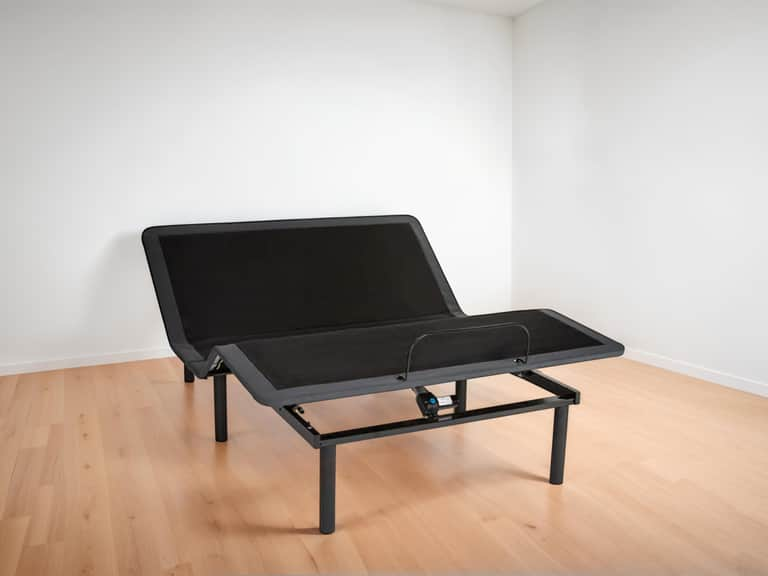
When comparing bed equipment, remember that the base and the bedding have separate roles. An adjustable base changes the mattress position; the fitted sheet must accommodate the mattress dimensions and movement. The Clean Bedroom Level 1 Adjustable Bed Base, for example, provides independent head and foot lift and is offered in several sizes. Its dimensions describe the base, not the required sheet pocket depth, so mattress measurements remain essential.
When the sheet still slips
If a fitted sheet repeatedly comes loose, start with the basics. Check that it is oriented correctly and that each corner is fully seated. Confirm the mattress size and depth again, taking account of any new layer. A sheet may look as though it fits while level but reveal a mismatch when the head or foot is raised.
Next, observe when the slipping occurs. If one particular corner releases, the sheet may be under uneven tension, or that corner may not be fully engaged beneath the mattress. If the sheet pulls across the middle of a split setup, the fitted sheet configuration may not allow the sides to move independently. If every edge feels tight, pocket depth or overall sizing may be insufficient.
Do not assume that pulling harder will solve the problem. Excessive tension can stress the sheet’s elastic and seams and may make it uncomfortable. Instead, check the manufacturer’s guidance for the mattress and base, and choose a fitted sheet whose dimensions match the complete sleep surface. If the mattress has an unusual profile or the bedding manufacturer’s measurements are unclear, ask for clarification before relying on a generic “deep pocket” label.
The quiet comfort of a good fit
Adjustable beds bring motion into a part of the home usually associated with stillness. A raised headboard, an elevated foot section, or a subtle change in posture can reshape the mattress beneath the bedding. Sheets that stay securely in place make those transitions feel less like a tug-of-war between fabric and frame.
The most reliable choice is not necessarily the sheet with the deepest pocket or the most elaborate description. It is the one whose measurements suit the mattress, whose elastic and corners hold evenly, whose configuration matches the bed, and whose fabric feels right to the sleeper. In a split king, separate Twin XL fitted sheets often make independent movement easier to accommodate. In any setup, measuring first is the simplest way to narrow the choices.
Once the details are settled, bedding can do what it does best: form a comfortable layer between the sleeper and the mechanics of the bed. The base moves. The mattress follows. A properly fitted sheet travels with both, allowing the night to return to its quieter work.